Everyday We’re Hustling: Chronic Stress, Stress Management, Stress Culture, & the Stress Cycle
*A blog post from my Substack, which you can access HERE
So you wanna know about stress??
Did I say ‘stress’ too many times in the title? It’s starting to sound funny to me now... Actually, it’s losing all meaning. Stress. Stress? Okay, now this is making me stressed.
According to my research, if you are a human being on Earth, there is a good chance that you are experiencing stress on the regular. And if you’re reading this and you’re NOT a human being on Earth, please reach out to me ASAP - I’d love to connect.
This article walks through the nerdy science sh*t behind stress, ways to know if your stress levels are negatively impacting your wellbeing, as well as some good old stress management strategies (striving to include some original tips that you have never heard before!!). We will also look at the ways that modern culture impacts on our own perception of stress.
Oh, and not to flex, but I don’t use the BORING AF caveman/lion/tiger reference EVEN ONCE.
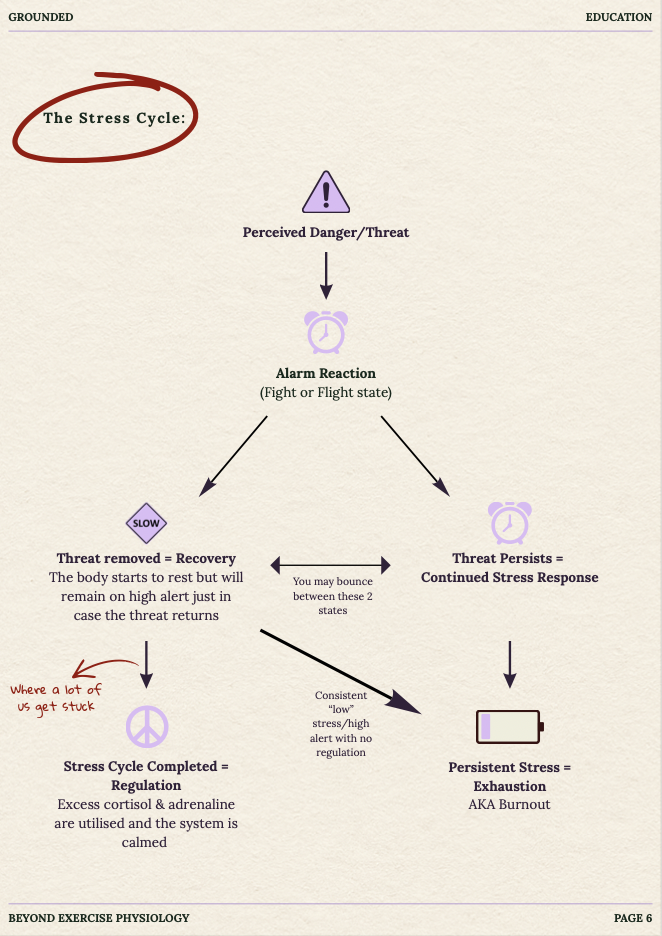
A page from my Nervous System Handbook, Grounded
The Science of Stress
As much as I hate to be the girl that spits out dictionary definitions at the start of an article (I promise I am usually cooler and more interesting than that), I want to ensure that the understanding of stress is clear. According to WHO, stress is “a state of worry or mental tension caused by a difficult situation” (1). Of course, a “difficult situation” is a little unclear, but it is understood that a stress response is elicited by any physical or psychological stimulus that disrupts bodily balance, or homeostasis (2).
So what’s actually going on in the body when we’re stressed? Well, our brain receives information from our senses regarding our situation or surroundings. That information is analysed and, if found to be potentially dangerous, prompts a distress signal to be sent to our hypothalamus (our brain’s master control centre) which activates our sympathetic nervous system, AKA ‘fight-or-flight’ mode. Are you still with me? You’re doing amazingly!
From here, hormones like adrenaline and cortisol are released for the purpose of providing us with enough energy to fight or flee (or freeze or fawn or flop) the dangerous situation. All systems within the body are affected by this response! Even things like wound healing, gut barrier function, pain sensitivity and capacity to feel gratitude. After the initial reaction, our calm system can step in to dampen the stress response, or, if the brain continues to perceive our situation as dangerous, another cascade of hormones is released to keep us on high alert (4, 5, 6). Intense, right?
Our stress cycle is a process that is built for acute instances of danger. Where a lot of us get ‘stuck’ is experiencing constant, low-level stress that limits our capacity to ever fully relax. Over time, this leads to increased sensitivity to stress, which causes more stress, and so on…
Hustle Culture
Rise and grind, girl-boss! It’s time to eat, sleep, work, repeat because nothing worth having comes easy. Right?
I think it’s beneficial to look at why, as a society, we have high, and sometimes debilitating, levels of stress. And why high stress may be seen as normal or even ~productive~.
Enter, Hustle Culture.

What I’m referring to here (as I’m SURE you’re all too familiar with) is a way of life that prioritises work and productivity over rest, balance and enjoyment of life; where achievement (often in status or finances) is seen as successful and relaxation is seen as lazy. When and why hustle culture rose in popularity is unclear… Potentially in the technological and entrepreneurial boom of the 90s and 2000s. Potentially with the idolisation of business people (ahem… tech bros) like Gary Vee and Elon Musk. And also potentially with the rise of social media and the comparison of lifestyles online. However you slice it, hustle culture exists to celebrate an inherently patriarchal and capitalist ideal, championing power, discipline, status and climbing the proverbial “ladder”.
What keeps me up at night is the obvious (but under-acknowledged) contradictions of our hustling way of life; why is it considered lazy to prioritise rest and wellbeing instead of work when we know that overworking can lead to burnout and even death (9)? Why is nonstop grinding celebrated when it has been proven that breakthrough ideas and creative problem-solving require boredom and rest? Why is going to bed early considered productive but sleeping considered lazy?
Sometimes I think we are getting somewhere with hustle culture and then I am hit in the face with a video from David Goggins or an article about an exploding Hyrox competitor, which reminds me that we are very much still in the thick of it.
DISCLAIMER: All of this is not to say that we shouldn’t work hard or ever push ourselves - it is imperative to our sense of purpose and ability to build resilience. But, maybe we would be a happier species if we created a culture where joy is prioritised over a need to be perceived as successful through a measure of burnout; a society that builds it’s identity around values, qualities and relationships over status as a “busy” person; and, most of all, a world where stress management is valued and invested in because it is understood as integral to longevity and enjoyment of our limited time on Earth (instead of being another metric to optimise and profit from). Wait, am I describing a Matriarchy???
Are you chronically stressed?
Hopefully I haven’t demonised stress too much so far... Stress is inevitable and necessary for our growth, sense of purpose and safety. What we humans tend to suck at is long-term stress management. According to research done by Gallup (7, 8), a relatively large proportion of us are feeling this; 41% of adults surveyed reported experiencing “a lot” of stress and 27% of adults (in the US) reported feeling so stressed that they could not physically function on MOST days. WTF???
Here are some signs (both obvious and subtle) that you may be chronically stressed:
Feeling worried a lot or most of the time
Feeling irritable or agitated often, or feeling that you are constantly on the verge of crying
Reduced stress capacity and/or feeling that your reactions are irrational to the stimulus presented
Higher than normal resting heart rate (above 80-100bpm at rest)
Persistent muscle tension
Hyper-vigilance
Sensory sensitivity (heightened reactivity to loud noises, bright lights or temperature changes)
Reduced tolerance to low stimulation or boredom, as well as difficulty feeling relaxed in the mind and/or body
Procrastination
Feeling detached from your body
Physical health issues that are not responding to treatment
Reduced healing capacity (prolonged sickness or delayed recovery from injury/illness)
Sleep issues
Headaches
Concentration issues
Desire to frequently use substances to numb feelings of worry or anxiety
Appetite issues
Unexplained stomach/digestive issues
Personally, I experienced stomach issues, fatigue, repeat illness, acne, unexplained weight gain, inflammation and depression that was not responding to treatments from doctors, naturopaths or skin specialists. I learnt how to work with my nervous system and the rest followed.
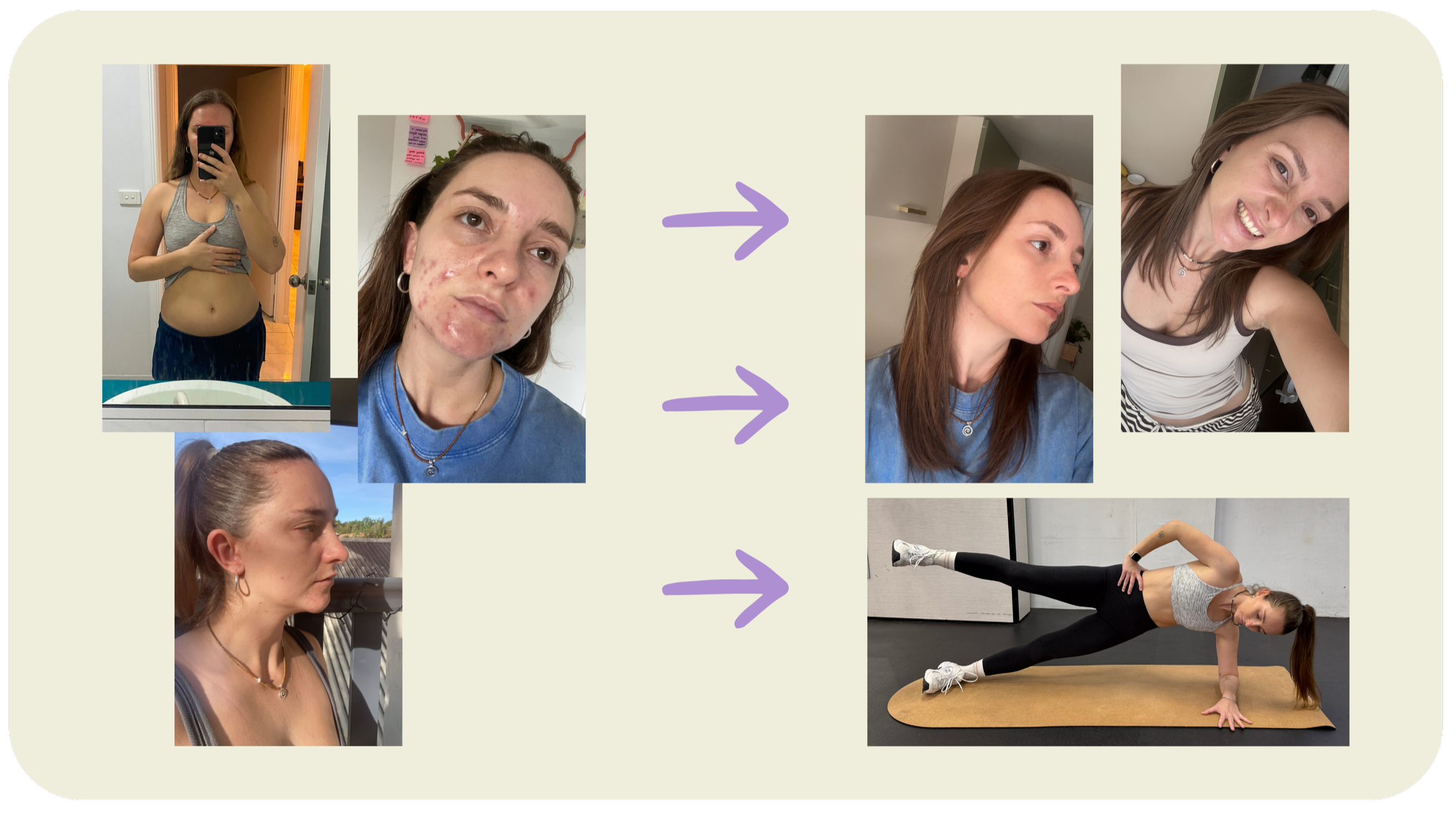
My before and after!!
Why does it even matter? Well, the long-term implications of chronic stress can be detrimental to our health - including a compromised immune system and organ function as well as tissue damage. BUT, don’t let that scare you - it is never too late to start working on reducing your stress. And, to be honest, rejecting hustle culture to find more peace (despite the risk of people thinking you are lazy) is kind of the most bad*ss, rebellious thing you can do in our culture.
Evidence-Based Stress Management
Okay so what are we actually (and realistically) supposed to do about our stress?
1. We consistently provide our nervous system with evidence of our safety (with the goal of creating a calmer baseline of being)
Prioritising rest, recovery and sleep as an absolute non-negotiable
Practicing regular nervous system regulation techniques
Having purpose outside of achievement and being busy (hobbies, relationships, joy)
Having strong boundaries with external stimulation (work, notifications)
Practicing mindfulness and gratitude in everyday moments
Engaging in creative activities to activate our calm state (our survival response has no need for creativity)
Spending time in nature regularly - clinically proven to lower stress hormones (15)
Utilising calming smells and sounds during stressful activities
2. We learn how to effectively navigate acute, in-the-moment stress
Calming breathwork techniques such as box breathing or the Physiological Sigh
Somatic movements such as tapping, shaking, yoga, dance or intuitive flows
Emotional release (laughing, crying, screaming, punching a pillow)
Physical affection
3. We build a more resilient nervous system that can handle stress with ease
Evaluating your own beliefs and habits that are likely contributing to your relationship with stress, rush, hurry and achievement
Physical activity - both general, enjoyable movement to assist in utilising excess stress hormones AND high-intensity or sprint interval training (with appropriate recovery) to increase stress tolerance
Meditation!!! A simple focus meditation to learn how to control your thoughts and reactions.
Stepping outside of your comfort zone
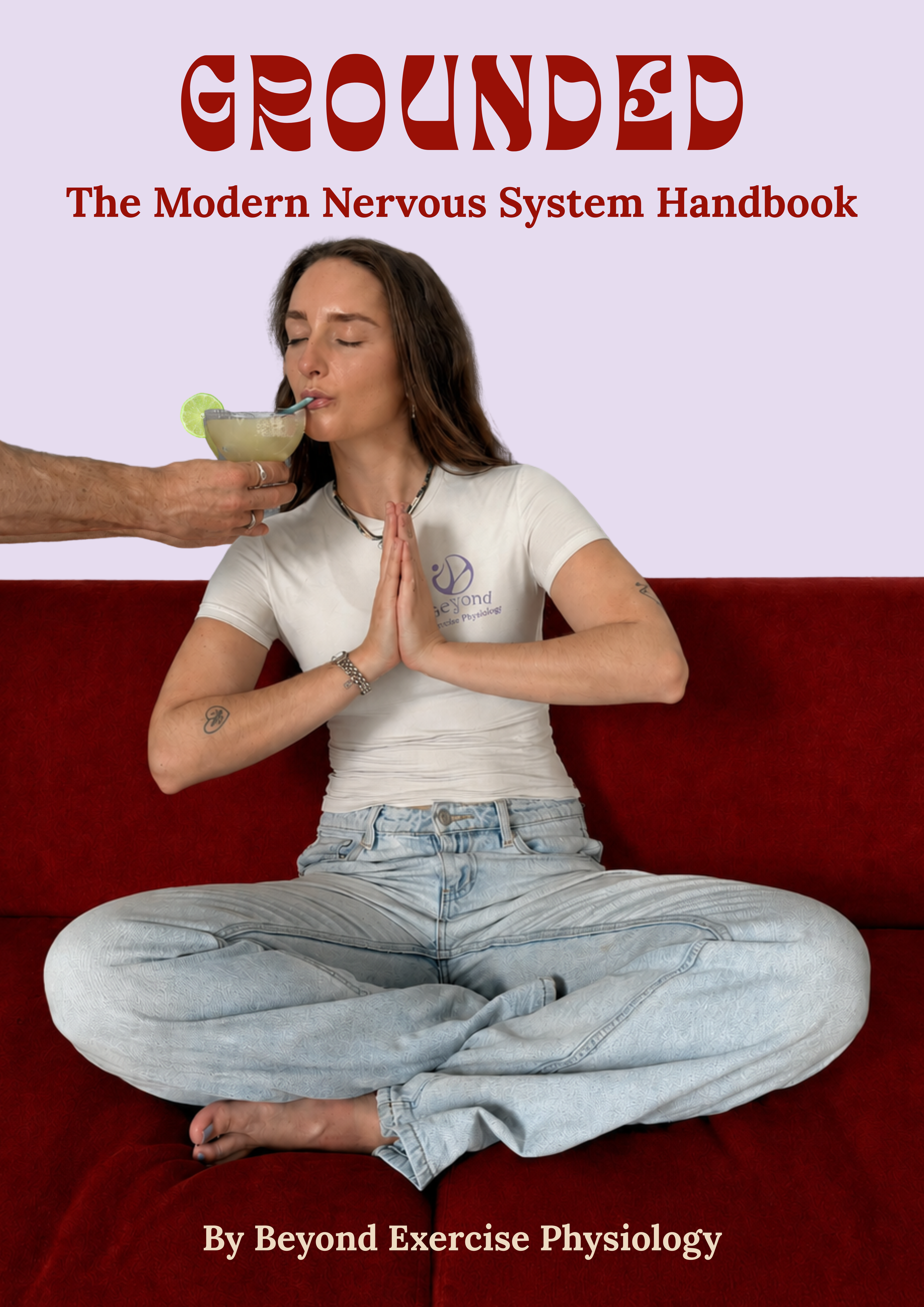
I know that’s a lot to take in! For that reason, I created Grounded: The Modern Nervous System Handbook for the girls (and guys) who want a clear guide on how to rebuild their relationship with stress and rewire their nervous system to allow more space for ease, joy and healing.
If you aren’t already following me online, you can find me on Insta & TikTok @morgan.beyond. If you would like to subscribe to receive notifications about my upcoming blogs, you can head to my Substack.
I would love to chat to you about all things stress, wellness and culture so please feel free to reach out anytime with your own hot takes! And if there are any topics that you would like me to explore within the health & wellness space, let me know <3
Love,
Mrs Beyond
---
Research for my fellow geeks:
Physiology and the Stress Reaction by B Chu & colleagues (updated 2024)
The difference between stress and anxiety by the American Psychological Association (2024)
The brain in stress and adaptation by McEwen & Gianaros (2010)
Stress affects on the body by American Psychological Association (updated 2023)
Physical affection to calm the nervous system by M Eckstein & colleagues (2020)
Stress reduction interventions article by C Regehr & colleagues (2013)
Screen media activity and mental health by Yale School of Medicine (2023)
Australian Institute of Health and Welfare (AIHW) Stress & Trauma Report (updated 2024)
World Economic Forum article on the way stress impacts our physical health (2024)
Research on the link between stress and physical illness (2008)